

Save Up to 90% on Select Pianos | Shop Before They're Gone

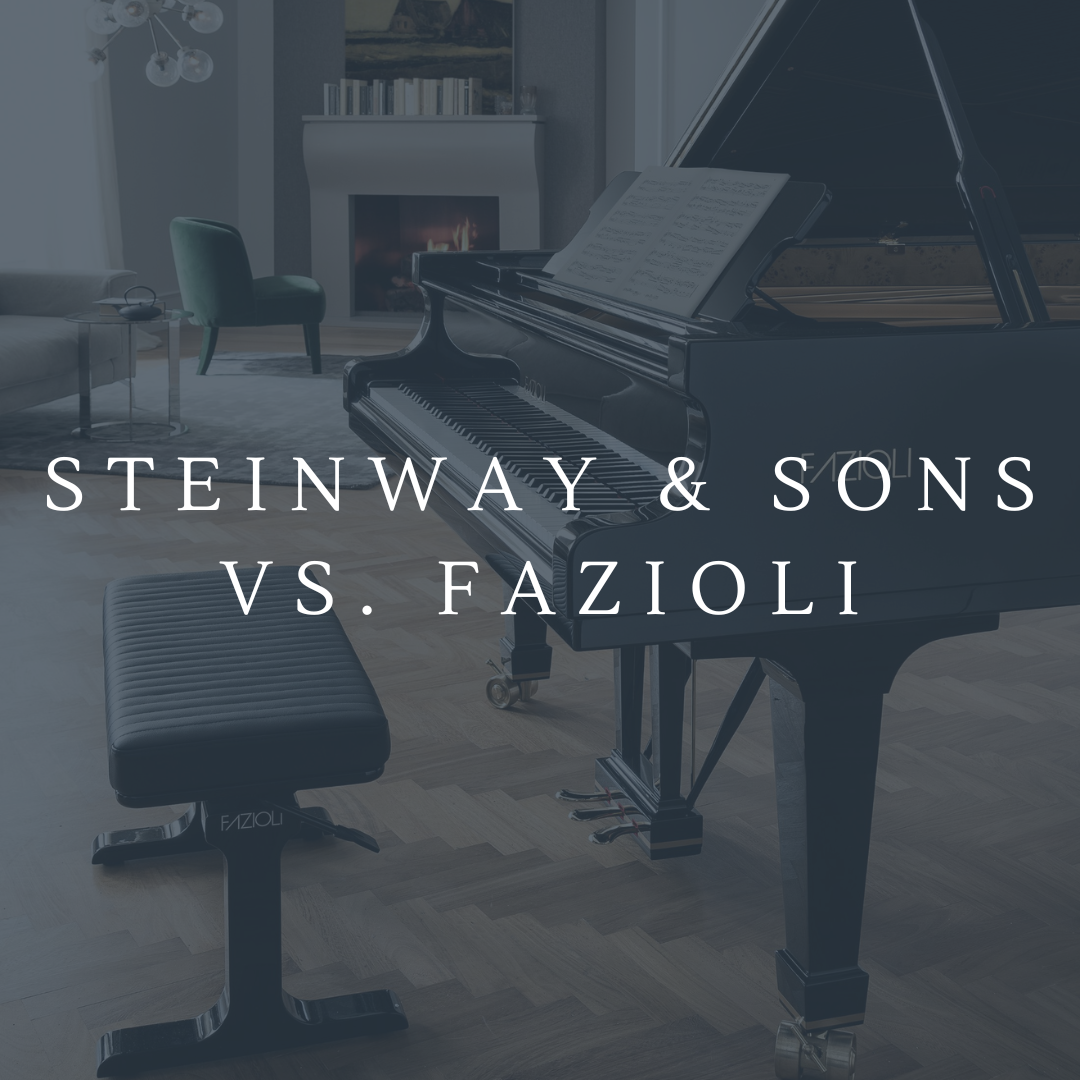
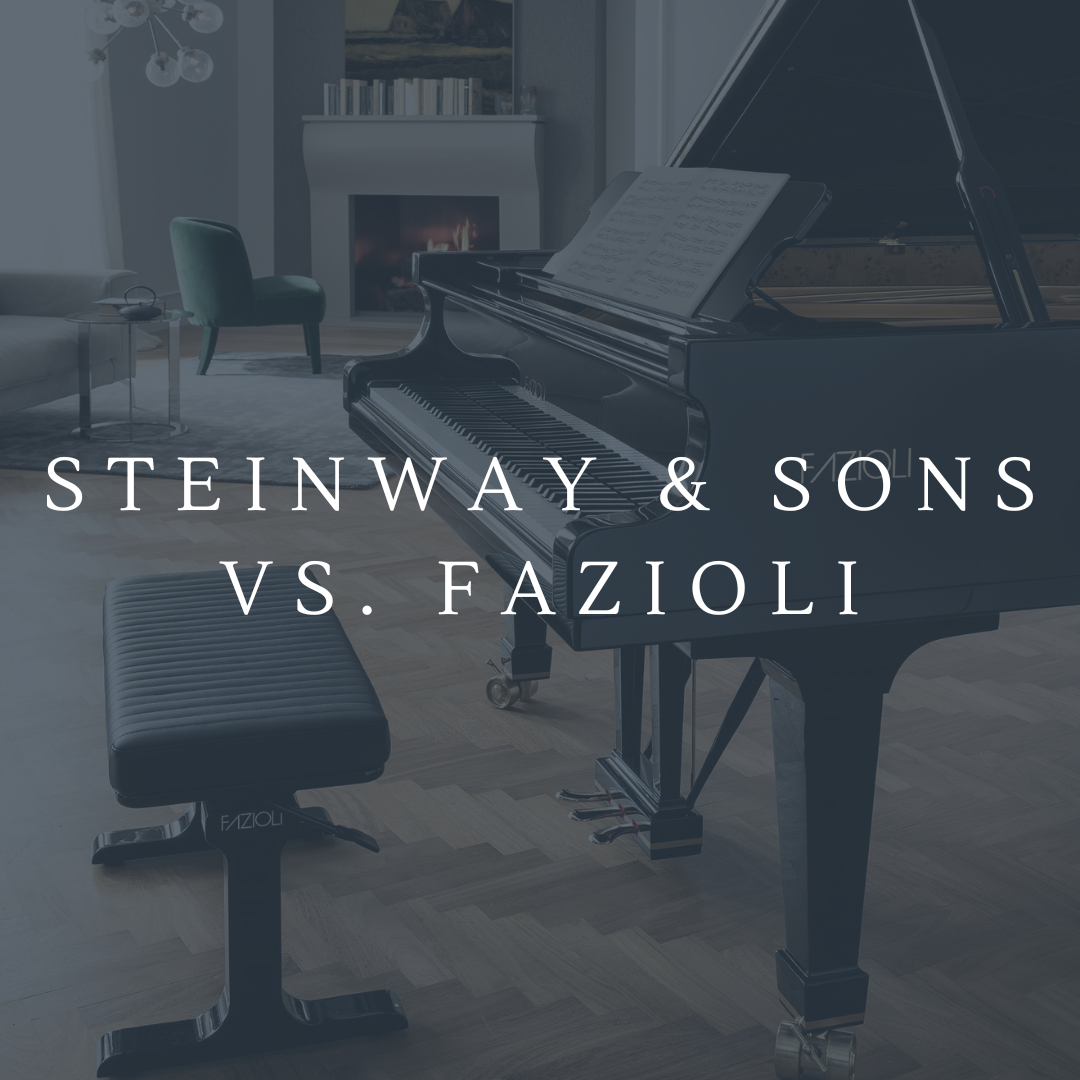
Steinway & Sons vs. Fazioli

May 01, 2024

Steinway & Sons vs. Fazioli

Let’s delve into the fascinating world of pianos and compare two iconic piano brands: Steinway & Sons and Fazioli.

Steinway & Sons

  • History: Steinway has a rich legacy, dating back to the early 1850s when it was founded by Heinrich E. Steinway. The company produces pianos at its two main factories in Astoria, NY, and Germany.
  • Production: Steinway manufactures around 3000 pianos per year, making it one of the biggest piano brands globally. They also have a robust artists program, collaborating with some of the world’s top pianists.
  • Innovation: Steinway goes beyond piano production. They are known for their small concert halls, full inclusion in prestigious music schools, and Spirio pianos. Spirio pianos incorporate state-of-the-art playback technology, modernizing grand pianos for home use.
  • Materials & Build Quality:
    • Soundboard: Steinway uses solid Sitka spruce, known for its resonant ability.
    • Laminations: Their pianos feature 17 laminations of hard rock maple.
    • Bridges: Hard rock maple is used for bridges.
    • Hinges: Brass and nickel are used for hinges, depending on the instrument’s finish.

Fazioli

  • History: Fazioli is an Italian brand that carries on the tradition of piano making. Paolo Fazioli founded the factory in 1981, and all Fazioli pianos are handcrafted in-house in Sacile, Italy.
  • Production: Fazioli takes craftsmanship to another level. Each piano undergoes months of refinement, testing, regulation, and woodworking. However, the process is time-consuming, with a single Fazioli piano taking around 2 – 3 years to complete. They produce fewer than 140 pianos annually.
  • Models: Fazioli started with a few models, including the F183 and F228. Today, they offer six concert grand models, with the F278 and F308 being their largest.
  • Materials & Build Quality:
    • Soundboard: Fazioli uses unique Red spruce from Italy for their soundboards.
    • Rim: Maple is used for the inner and outer rim.
    • Bridges: A combination of maple and other wood is used for bridges.
    • Hinges: Fazioli pianos feature gold hinges, adding to their exquisite craftsmanship.

Conclusion

Comparing Steinway and Fazioli ultimately comes down to personal taste. Steinway offers versatility, a strong artist program, and technological innovations. Fazioli, on the other hand, boasts meticulous craftsmanship, a warm sound, and a sense of exclusivity. Both brands have their unique characteristics, making them beloved by pianists worldwide.

Whether you prefer the American legacy of Steinway or the Italian artistry of Fazioli, both brands continue to shape the world of piano music. 


Leave a comment

Comments will be approved before showing up.


Also in The Piano Place Blog

Young Virtuosos Are Bringing Classical Music Back — and We're Here for It

May 18, 2026

Something remarkable is happening in classical music right now, and honestly, I don't think it's getting nearly enough attention. A new generation of young pianists — most of them under 30 — are turning Bach and Chopin into social media sensations. And the audiences showing up to listen? Millions of them. Many of them Gen Z.

Continue Reading

TikTok, Pop Songs & the Piano Covers Phenomenon

May 11, 2026

If you've spent any time on TikTok or YouTube Shorts this year, you've probably come across it: someone sitting at a piano, playing a slowed-down, stripped-back version of a pop song you know by heart — and it somehow sounds more beautiful than the original. Welcome to one of the biggest music trends of 2026.

Continue Reading

The Piano Revolution: How Social Media Made the Piano Cool Again

May 04, 2026

I have to be honest with you — when I first started seeing piano videos explode on TikTok and Instagram Reels, I thought it was a short-lived trend. You know how the internet works. Something blows up, gets overplayed, and disappears by the next week. But here we are in 2026, and the piano isn't just trending. It's thriving. And I think it's here to stay.

Continue Reading